



🧬 What is genetic diversity and why is it needed in a wild horse herd?
⚠️🏛️ Today, in an early morning meeting in the House of Representatives, we were reflecting on the important issue of genetic diversity. It was interesting to say the least.
🧬 What is genetic diversity and why is it needed in a wild horse herd?
🐎 Genetic diversity is the level of variation in genes among individuals within a population. In a wild horse herd, this comes from having many different family bloodlines and breeding individuals rather than a small, closely related group.
🌿 This diversity is critical because it keeps the herd strong and resilient—reducing the risk of inherited health problems. In a naturally functioning herd, genetic diversity is maintained through the movement of horses between bands.
💉 Ever since our PZP fertility program started, we have been very conscious of this, and we have been careful not to have foals from the same bloodlines (we know their bloodlines because we have up to seven generations of records). Of course, there is always one horse who wants to prove us wrong—and that is Spring, with her adorable sons Splendor and Wonder. Spring turned out to be resistant to PZP, so we darted her earlier than normal, and that worked; she did not have a foal in 2025. Only time will tell what happens this year. She is a science project all on her own ; )🥼
⚖️ Anyway, getting back to the subject—if we have too low of a population, eventually there would not be enough horses who are unrelated to each other, and this could eventually lead to extinction. That would be a betrayal to our great grandchildren.
🎯 We do not believe that is what anyone is aiming for (pun intended).
🏛️ So the discussions today in the House of Representatives included the TNF and the AZDA, and “friends of the Salt River wild horses” and “humane voters of Arizona” and the Representative, who brought up two important points:
- A. How do we make sure they remain a viable population, and at what number?
- B. How do we know that when the next RFP comes around in 5 years, it will not aim for more removals?
💩 The AZDA told us they are looking into doing a genetic viability study on the herd in the near future. This will be very interesting. Apparently, you can do this by collecting manure samples—so if you see anyone putting poop in bags, you’ll know why. : )
🙏 Anyway, we want to thank the representative who brought it forward, he seemed surprisingly knowledgeable about everything regarding the herd, but we swear we did not meet him before today. We are sorry not to post his name yet, because he does not need to be overwhelmed right now. But your opinion is always welcome with your own representatives.
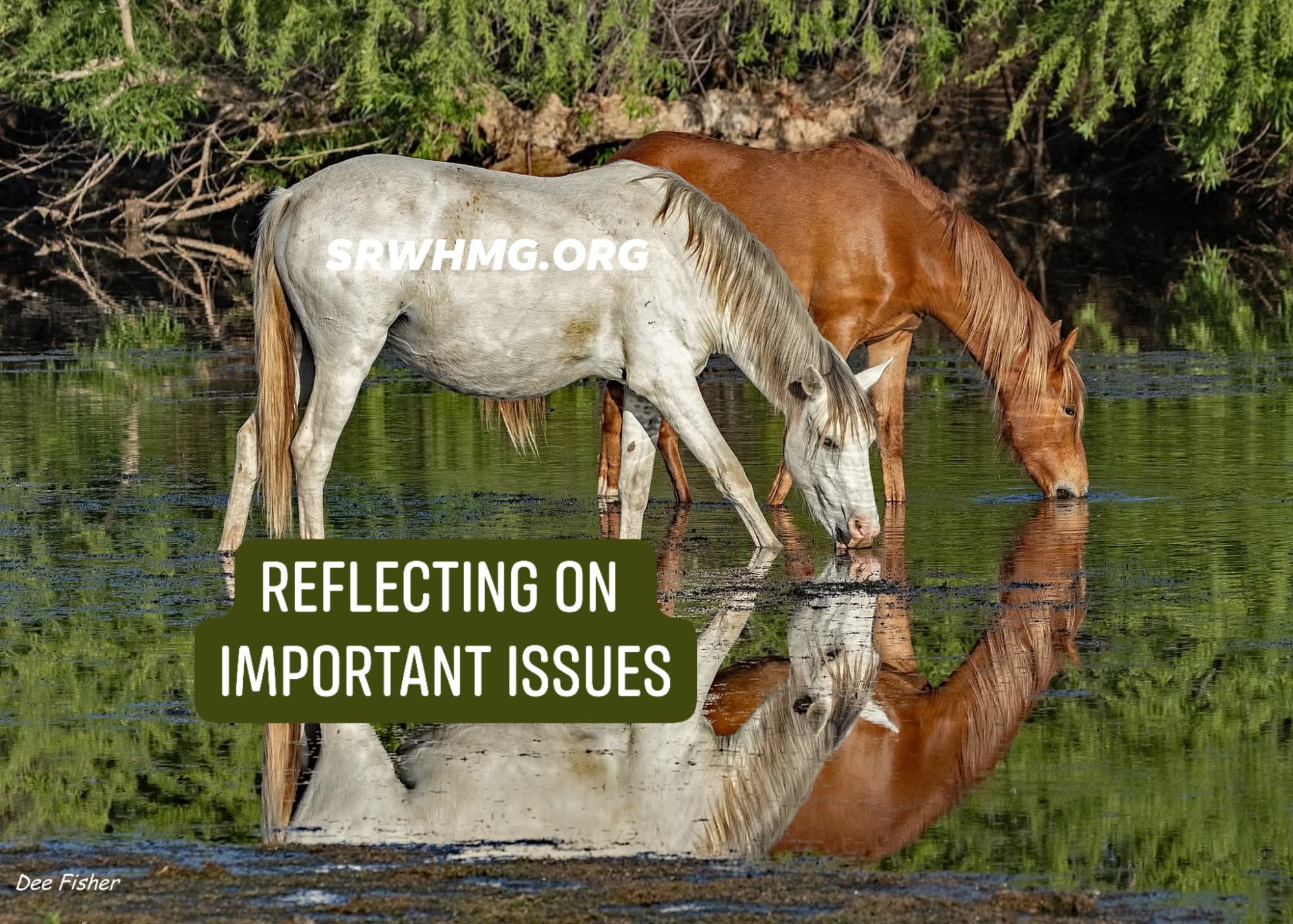
📸 The amazing picture above, taken by Dee Fisher, has the following significance to this story: one of these two horses is the most important horse on the entire Salt River, genetically speaking. Do you know which one and why? We are currently discussing what is going to be the correct and ideal time to leave her “open.” and guess what, today is her second Birthday!!!!!
💬 We would love to know your opinions on this subject. Thank you for reading through the entire post! Please give it a like and share, if you care about the Salt River wild horses! Stay tuned!